 ← All Games
This game is also known as ABC Game
Rules
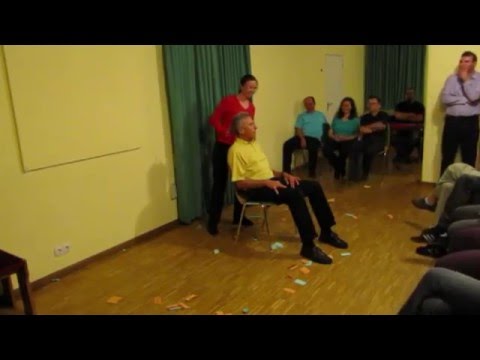
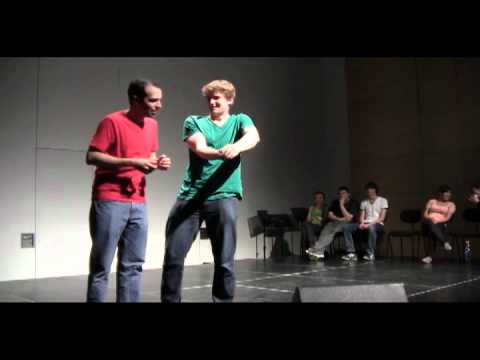
Two Players perform a scene in which each line begins with the next sequential letter of the alphabet. After reaching the end, the Players then continue the scene, now going backwards through the alphabet.
Offer the team ten points if they can get through the game without any mistakes. Subtract one point for every error.
Notes
Ask the audience for a letter. Start on this letter, rather than beginning with “A” each time the game is played.
If the audience gives the letter “Q,” then the first line of the game begins with the letter “Q” (“Quickly, Ted! Bring me the crystals!”). The second line, which is delivered by the second player, begins with the letter “R” (“Right away, Larry.”). The first Player then delivers a line beginning with “S,” and so on.
Loop around to “A” following “Z.”
After going all the way through the alphabet back to “Q,” begin going backwards through the alphabet – follow “Q” with “P,” “O,” “N,” etc. Follow “A” with “Z.” Continue until you've landed on “Q” for the third and final time.
Having more than two Players in this game becomes confusing very quickly. However, having an extra Player standing by offstage, ready to briefly walk in and deliver a single line if one of the other Players freezes, can be a good idea. Just be sure that this extra Player understands that he is there strictly to assist; not to overtake the scene.
Another variation to allow the involvement of more Players is to switch after going through the full alphabet forward, leaving the second half of the game to two fresh Players. Try to make this transition a seamless part of the scene – justify the entrance of two new characters while giving a reason for the previous two to leave.
Always get your next letter in mind as quickly as possible.
If you must stop and work your way through the alphabet before giving your next line, make it a part of the scene. Don't simply freeze. Continue acting physically.
The game is suitable for all ages, and there are two great equalizers: the letters J and Q. More skillful players will often race ahead, but with limited instances of the letters "J" and, particularly "Q", leading players often get stuck, giving others time to catch up. This keeps the game interesting for players of different levels.
Kids
This game can also be played well with children. It's a nice game to learn the alphabet (children should already know the alphabet, otherwise it could be a bit difficult)