Skip to content
Games

Freeze Tag

Also known as: Freeze, Switch, Zap, Tap Out, Chain Impro

Freeze Tag: When the picture stands still and everything starts over

The Freeze Tag game is basically adrenaline turned into an art form. It's the absolute classic among improv games for channelling stage fright straight into creative energy. You'll also hear it called "Freeze", "Zap", "Chain Impro" or "Tap Out". It's the perfect warm-up for any group, but thanks to its speed and high entertainment value, Freeze Tag works just as brilliantly as a stand-alone act on the big stage.

At its core, the game is about stealing a random, frozen body posture and breathing new life into it in a completely different scene with a completely different meaning. It's the ultimate training ground for the most important rule in improv: the "yes, and". You accept the physical reality your scene partners give you and add your own fresh world to it.


How to play the Freeze Tag game

The setup is dead simple. All players in the group stand at the edge of the stage or in the background, ready to go. Two players step into the spotlight and start a scene with full physical commitment. It's important that they don't just chat with each other but use the space, move around, do things and stay physically present.

After a short while someone calls "STOP!" or "FREEZE!" loudly, either from off-stage or from one of the waiting players. In that exact moment, the actors on stage have to freeze instantly in their current position, like a statue. Every gesture, every bent knee, every raised arm stays absolutely still.

Now a new player enters from the side. They pick one of the frozen colleagues, gently tap them out and take over that exact pose. The tagged-out player leaves the stage. The new player immediately begins a completely new scene. This scene is inspired purely by the physical posture and is allowed to have absolutely nothing to do with the previous storyline. The heart of the game is what's called the justification. Why am I standing like this? The more absurd the contrast to the previous situation, the bigger the audience reaction usually is.

Freeze Tag rules in 6 steps

  1. Set up. All players form a loose half-circle at the edge of the stage. Two players step out and begin a scene with full physical commitment.
  2. Play the scene. The two players move, use the space and react to each other. No "talking heads". Bodies do as much work as words.
  3. Call the freeze. Any waiting player can shout "Freeze!" or "Stop!" when the picture on stage is strong or interesting.
  4. Hold the picture. Both stage players freeze instantly in their exact poses. No drift, no relaxation.
  5. Tag and take over. A waiting player walks on, gently taps out one of the frozen players and takes over that exact pose.
  6. Start a brand-new scene. The new player justifies the pose with a completely fresh scene. Story, setting and characters have nothing to do with what came before.

Repeat until you run out of breath, ideas or energy. The game ends when the group decides. There's no formal win condition unless you play the Elimination Freeze variant.


Why Freeze Tag is an all-time favourite

There are good reasons this game is missing from no workshop. It addresses the typical hurdles improvisers tend to run into.

  • Body over brain: Many players tend to overthink. We often call it "talking heads": scenes in which two people just stand around and chat without anything physical happening. Because Freeze Tag drops you straight into a pose, you're forced to use your body as the impulse generator. You start in motion, not in your head.
  • Pace and energy: Freeze Tag scenes tend to be short, punchy and oriented towards punchlines. That keeps the energy on stage high and the audience's attention locked in.
  • Associative power: The game trains the ability to reinterpret things in a flash. A raised hand that was a high-five a moment ago turns into reaching for an apple on a tree, or trying to screw in a light bulb.
  • Ensemble spirit: Everyone is involved. Whoever waits on the sidelines has to stay laser-focused to catch the perfect moment to jump in. You learn to read the focus of the scene and to support your colleagues with a well-timed freeze.

The different schools of improv

It gets really interesting when you look at how the great pioneers of improv view this game. Even though the rules stay the same, the philosophy behind them radically changes how it's played.

Keith Johnstone: the spontaneity machine

For Johnstone, Freeze Tag is a prime example of his "non-thinking" philosophy. He uses the game above all to switch off the inner censor. Because the player has to jump straight into the pose and start, there's no time left to search for a "good" or "original" idea. You have to take the very first thing that comes to you. Johnstone loves it when the physical pressure forces players into absurd, unplanned actions. The goal is to show the audience how a person gets stuck in a bind and then rescues themselves through a spontaneous flash of insight. Things are allowed to be chaotic, fast and competitive here.

Del Close: the search for truth

In the Chicago school shaped strongly by Del Close, Freeze Tag is often viewed with a certain scepticism. Close was a sworn enemy of cheap gimmicks. He worried that Freeze Tag tempts players to play only for the quick laugh. As soon as a player walks on stage and merely cracks a flat verbal joke to explain the pose, the artistic integrity is lost from this point of view. When Freeze Tag is used here, it's used as an exercise in transformation. The aim is to seriously carry the physical energy over into a new, real reality. You play less for the punchline and more on the new relationship between the characters that emerges from the pose.

Viola Spolin: training perception

For Viola Spolin, Freeze Tag is an essential exercise in dealing with physical space. Her focus is on how the body is positioned in the room. When you tap someone out, you should try to feel the physical tension of your predecessor in your own muscles. In her tradition, players are strictly required to let the new scene be born from the bodily sensation. If the knees are deeply bent, what does that do to my status? Do I feel old, burdened or perhaps coiled like an athlete ready to spring? It's about experiencing the form, not just the visual idea.

Mick Napier: radical decisiveness

Mick Napier sharpened this approach even further. His motto is simply: "Don't think." He uses Freeze Tag to teach players to make a strong decision within the first millisecond. It doesn't matter how dumb or illogical the decision seems at first glance. What matters is defending it with 100 % self-confidence.


Pro tips for more depth and quality

So that Freeze Tag doesn't end up as just a string of flat jokes, here are a few strategies that lift the game to a higher level.

1. Avoid the obvious continuation

The obvious is often the most boring. If someone is frozen with a raised arm, the policeman directing traffic is the first idea every player has. Try to take a step further. Maybe the person is a conductor calming their orchestra, a window cleaner working at a dizzying height, or someone with limited success trying to throw a lasso.

2. Give extreme poses as gifts

As a player on stage, putting yourself in uncomfortable or dynamic positions is a wonderful gift to your colleagues. Whoever lies on the floor, balances on one leg or leans far back forces more interesting new scenes. A static standing chat barely offers any inspiration to the next player.

3. The timing of the freeze

When is the right moment to tag out? A good freeze hits when the picture is especially strong or when a conflict has just reached its peak. Whoever interrupts too early cuts off an interesting development. Whoever reacts too late lets the energy of the scene seep away. The ideal moment is reached when the audience is deep in the story and the physical constellation is begging for a resolution.

4. Watch carefully

Whoever stands at the side of the stage shouldn't only be thinking about their own next idea. You have to watch closely how your colleagues' poses look. Whoever skims over it tends to take the posture over inaccurately or incompletely. The result is a wooden start to the new scene because the physical justification doesn't match the picture you saw.


Exciting variations for training

Once the classic form is solid, you can crank up the difficulty to train new skills.

  • Blind Freeze: The waiting players stand with their back to the stage. Whoever feels the time is right calls "stop", turns around and has to work with whatever picture they find. That stops people from preparing a scene minutes in advance and pushes pure spontaneity.
  • Elimination Freeze: This is the competitive version. Anyone who lacks a quick idea, hesitates too long or stalls in the justification is out. At the end one "freeze king" is left. That ramps up the pressure and works especially well in shows.
  • Object Freeze: Here the focus is on the pose always involving the interaction with an invisible object. Every new scene therefore has to define an object that's being held or moved by the body posture.

Bottom line

The Freeze Tag game is much more than just a child's game for grown-ups. It bundles the core competencies of improv: attention, physicality, radical acceptance and the courage to decide quickly. Whether you play it as a quick gag generator in Johnstone's spirit or as a deeper transformation exercise in the Del Close tradition. It remains an indispensable tool in every actor's kit. It reminds us that we should often think less and feel and act more. In the moment when the world stands still for a single beat, the entire freedom to create something completely new is right there.

Videos

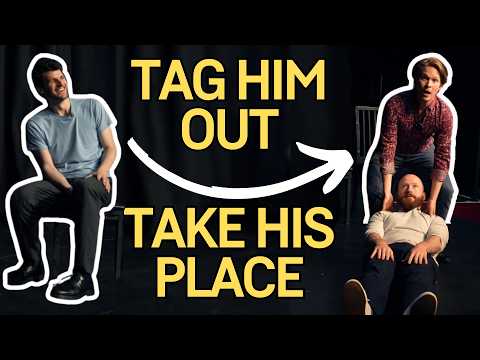
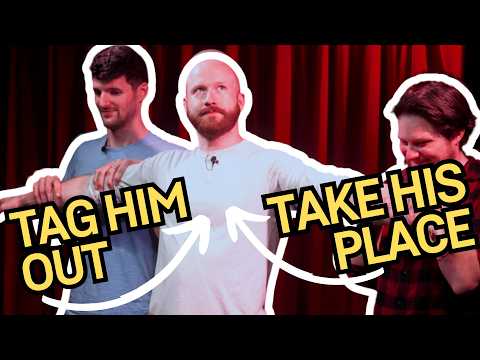
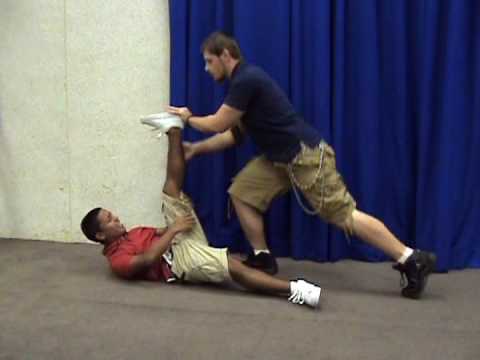
The Freeze Tag Game – Shoot From The Hip
Click loads data from YouTube

The Freeze Tag Game – Shoot From The Hip

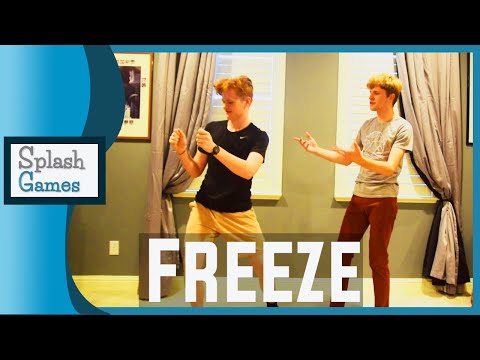
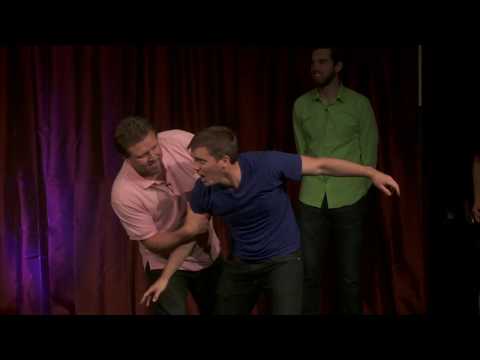
Comedy Improv Game: Freeze – Splash Games
Click loads data from YouTube

Comedy Improv Game: Freeze – Splash Games

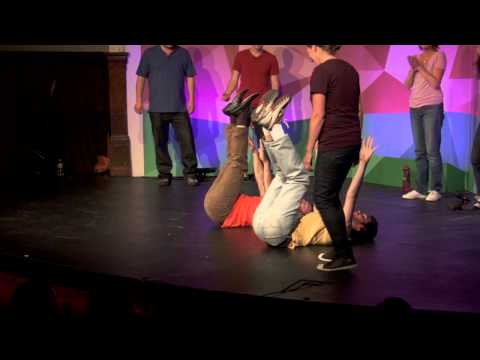
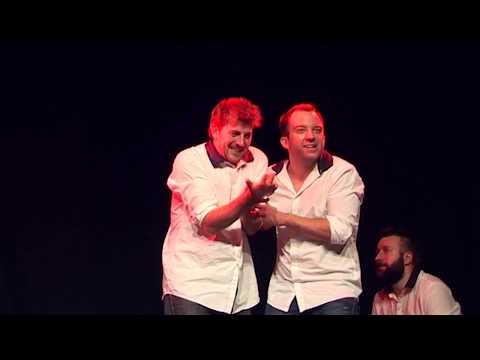
Improv: Freeze – Cornerstone SF
Click loads data from YouTube

Improv: Freeze – Cornerstone SF

Freeze [1x36] – improvftw
Click loads data from YouTube

Freeze [1x36] – improvftw

The Freeze Tag Game – Shoot From The Hip
Click loads data from YouTube

The Freeze Tag Game – Shoot From The Hip

FREEZE! Improvisational Game – SpeechandDrama
Click loads data from YouTube

FREEZE! Improvisational Game – SpeechandDrama

Improv: Freeze – Cornerstone SF (2)
Click loads data from YouTube

Improv: Freeze – Cornerstone SF (2)

1 more video in another language
Freeze Tag: Rababakomplott & Öde und Schriller – Thüringer Improcup 2015
Click loads data from YouTube

Freeze Tag: Rababakomplott & Öde und Schriller – Thüringer Improcup 2015

Rababakomplott, Öde und Schriller

Last edited by improwiki, 11.05.2026 19:48 · Version History · ·

More from this category

Follow group

When this group creates new events, they'll automatically appear in your personal event list. You need to be logged in for this.

Log in now